


The news of today’s launch of a Chinese rocket propelling three astronauts into orbit took many Americans by surprise. And it’s not just this mission; the fact that China has had an orbiting space module above Earth for nearly two years – Tiangong 1 – is not widely known among the American public.
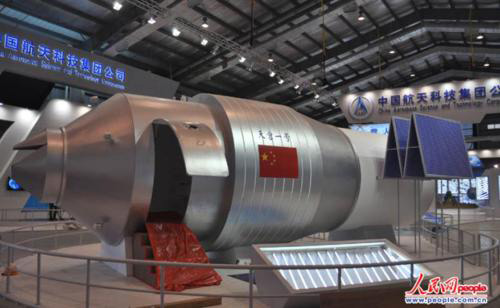 |
| A scale model of the Tiangong 1 module. National pride is a key motivator of the Chinese space program. |
But the Chinese space program is building momentum – quickly. The current flight is the fifth manned mission, coming on the heels of a busy 2012 that saw more than a dozen Chinese launches aside from their manned efforts.
While the attention of the American public has been focused on the need for our astronauts to buy passage on the Soyuz spacecraft in order to reach the International Space Station, China has made a national commitment to its space program.
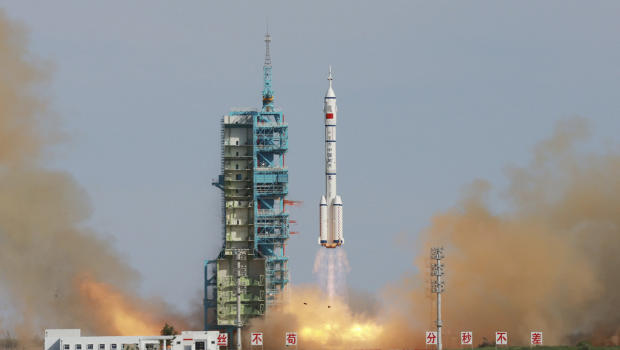 |
| Todays’s launch of the Shenzhon spacecraft in the Gobi desert, initiating China’s fifth manned mission. |
What are the implications of the rapidly accelerating footsteps of the Chinese space program? Well, as we’ve seen all too long ago, a focused national program can get you from ground zero all the way to the moon in just a handful of years.
Of course, the motivation for that particular space exploration pace was a desperate rivalry with the Soviet Union. Currently, our one-time rival’s space program is our only access to orbit – ironic to say the least.
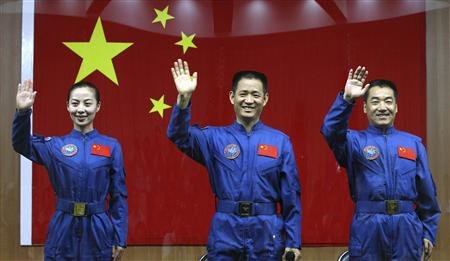 |
| The crew of the current mission includes China’s second female astronaut. Is there something familiar about those colors? |
But the big question is this: are we comfortable letting China – a country growing ever more competitive in the world economic markets, decidedly a military super power – take the lead in space? Their program is still building a foundation, with nothing as complex as our mothballed Space Shuttle or as monumental as our storied lunar journeys. Yet one thing is clear: they are dedicated to making progress, and major steps can be taken in a short time.
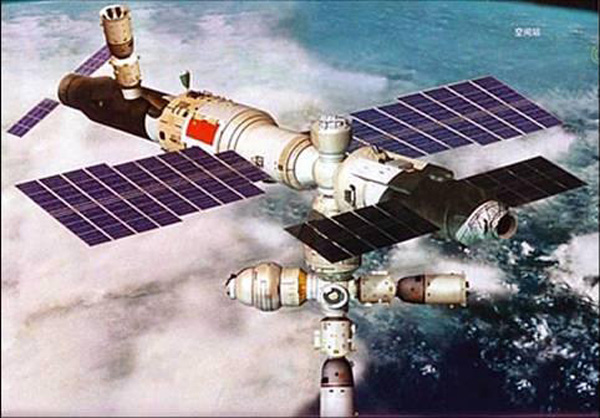 |
| China anticipates expanding its space station to this expansive degree – in less than seven years. |
Perhaps this is the time for new space race – maybe not one that plays out as a drama driven by the threat of a nuclear arms race, but one chasing global economic opportunities.
The decision must be made soon. Playing catch-up is not a desirable position. And it’s all too clear that China is not going to wait.
Related posts

June 8, 2026


March 31, 2026